
International
How do we learn conflict and non violence?
When conflict happens, we often talk as though aggression is simply something people do. But children also learn how people around them respond to anger, disagreement, fear and unfairness. They absorb what is normal, what is admired and what people do when relationships become difficult.
That raises an intriguing international question.
If ways of responding to conflict can be learned, what might we learn from communities where interpersonal violence is largely absent from everyday life?
Growing up with the Temiar
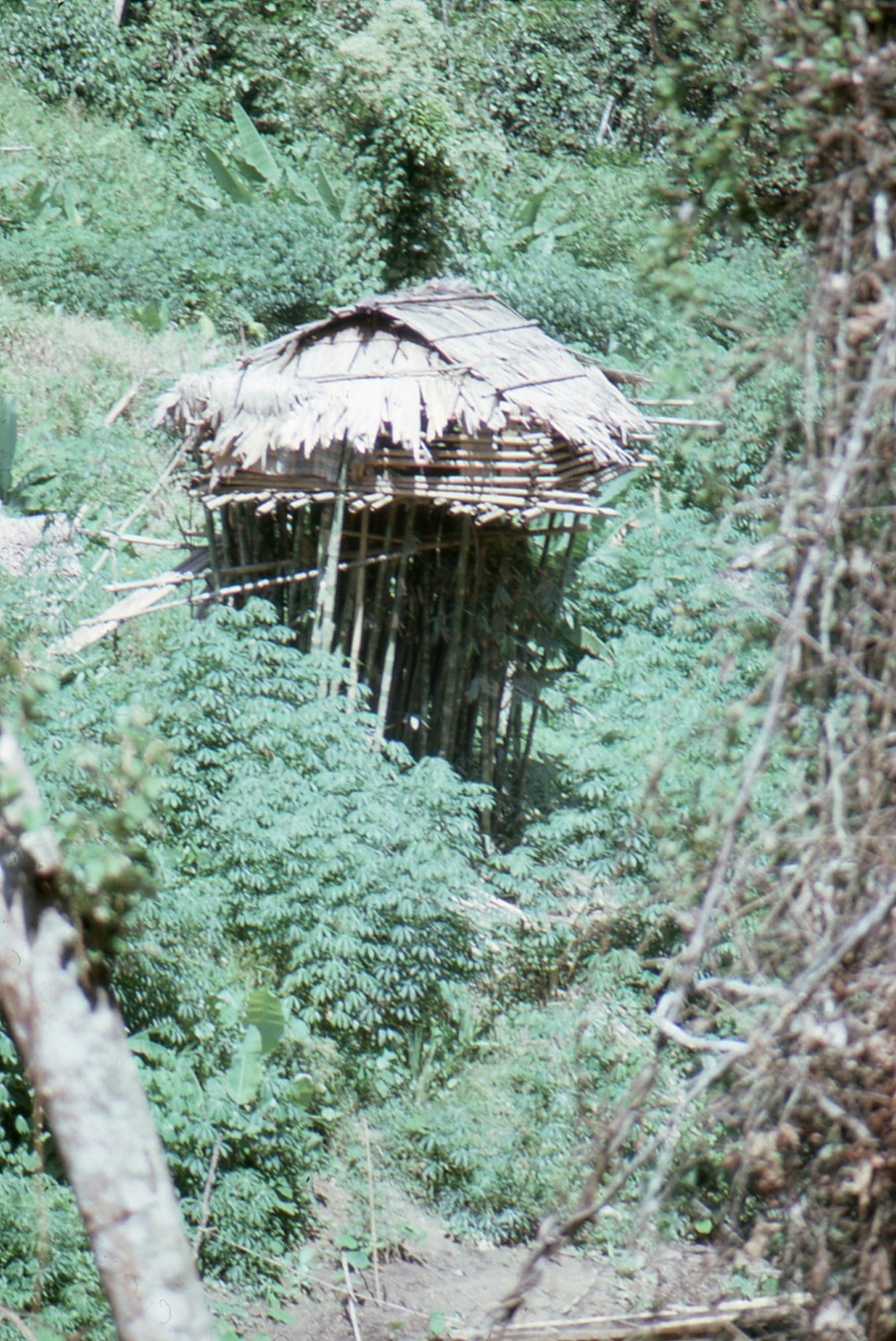
The Temiar are one of the Indigenous Orang Asli peoples of Peninsular Malaysia, and one of the larger Senoi peoples of the peninsula.
Andy Hickson writes:
I spent part of my childhood growing up with the Temiar in the Malaysian rainforest and travelled extensively through the region, spending time in many different Temiar communities.
In my experience of living with the Temiar, there was no physical or emotional violence between people.
I am not suggesting that this proves violence has never existed among Temiar people, or that every Temiar community and every generation is identical. It is simply my experience of living among them, and it has stayed with me throughout my life.
Years later, Sue Jennings and I spent extended periods living and working with Temiar communities and returned on later visits. What continued to interest us was the way relationships, childhood, belief and community life appeared to support a strongly non violent way of living.
It left me with a question that still feels important:
What does a child learn about conflict when interpersonal violence is not being modelled by the people around them?
That question takes us beyond whether individual children are naturally aggressive or naturally peaceful. A child growing up in Britain may encounter violence in many possible parts of life, including family or community experience, school, television, film, games, online spaces and news coverage. Not every child encounters violence in the same way, but within the wider culture it is readily available as one imaginable response to conflict.
The Temiar experience raises the possibility of something very different. If children grow up without seeing parents and other members of their community use physical or emotional violence against one another, violence is not being presented to them as an ordinary social response to imitate. What difference might that make?
The Semai and learning non violence
This question has also been explored anthropologically. In the early 1960s, Robert Knox Dentan carried out fieldwork among the Semai, another Orang Asli people of Peninsular Malaysia. His 1968 book was titled The Semai: A Nonviolent People of Malaya. Dentan was interested not only in the relative absence of interpersonal violence he encountered, but also in how children grew into that way of living.
He returned directly to the question in later work on childhood and the learning of non aggression. Rather than treating peacefulness simply as an adult rule, he explored the everyday processes through which children learned responses to fear, aggression and conflict. That shifts the question considerably. Instead of asking whether some people are naturally peaceful, we can ask whether children learn a repertoire of possible responses from the social world around them.
If violence is repeatedly demonstrated as an available response, it becomes one possibility. If it is largely absent from social life, perhaps something else becomes possible.
What happens when conflict comes from outside?
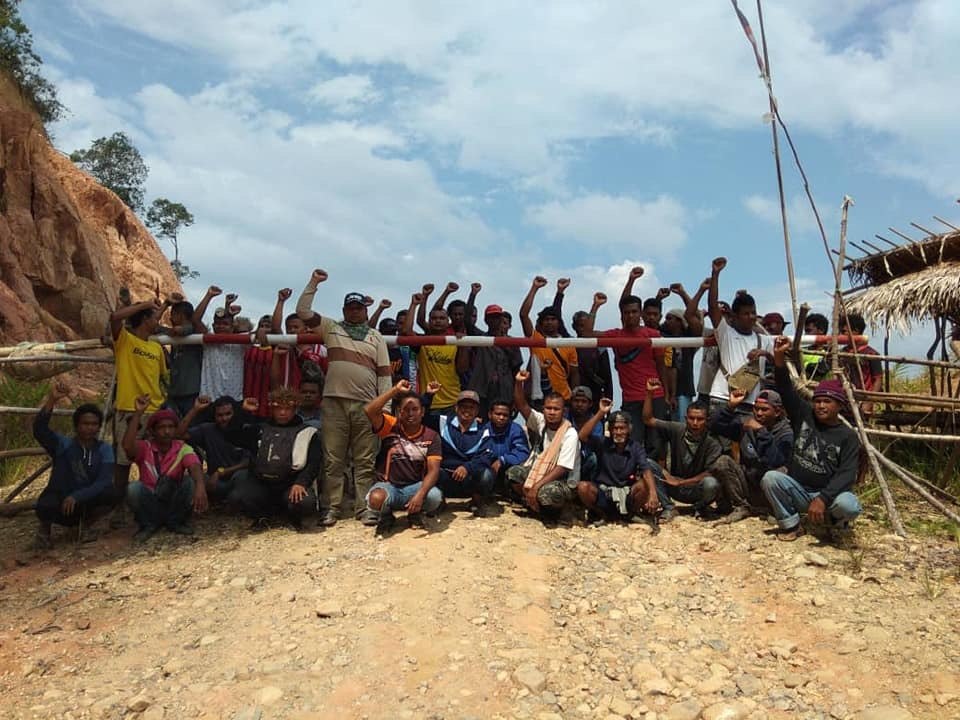
This becomes particularly interesting when we look at contemporary Temiar experience. Temiar communities in Gua Musang have faced long running disputes over customary land, logging and development. Peaceful blockades have repeatedly been used to challenge activities on land communities regard as ancestral territory, with actions documented over many years and continuing into 2026.
These contemporary struggles show that non violence need not mean avoiding conflict or accepting what is happening. The blockades are themselves acts of resistance, deliberately placing communities in opposition to activities they believe threaten their land and way of life, while seeking to pursue that opposition without physical violence.
Seen alongside the earlier research and experience, this raises a deeper question about conflict. Perhaps the choice is not simply between accepting something peacefully and resisting it violently. There may be ways of opposing, challenging and resisting injustice that do not depend upon reproducing violence in return.
What are children learning?
This brings us back to childhood. Most of us probably cannot imagine growing up completely outside the presence of violence. Even when there is no violence within our own homes, stories and images of violence surround us through media, history, entertainment and public life.
That makes the Temiar experience difficult to translate into an ordinary anti bullying lesson. Perhaps that difficulty is precisely why it belongs here. What would it mean to grow up in a social environment where humiliating, threatening or physically hurting another person was not something routinely available to copy from the adults and community around you? And if children learn partly by observing how other people handle disagreement, what are children in our own communities learning from us?
This does not produce a simple programme that can be exported from the Malaysian rainforest to a British classroom. Nor should it. International learning is not about finding one culture that has solved a problem and asking everybody else to imitate it. Sometimes another way of living simply allows us to imagine that something we have come to regard as inevitable may not be inevitable at all.
Perhaps that is the most important question this section leaves us with:
How much of the violence we regard as normal is actually something we have learned to regard as normal?
Next: Can an anti bullying solution travel?
Learning from another culture does not mean copying it. Ideas change when they move between languages, communities and education systems. That takes us to our next question:
When an anti bullying approach crosses a border, what travels with it and what needs to change?