
International
Can an anti bullying solution travel?
A good idea rarely stays where it began. Researchers share findings, schools hear about programmes being used elsewhere and organisations begin working across national boundaries. Before long, an approach developed for one group of young people may be being tried thousands of miles away.
But when an anti bullying approach moves, what exactly travels with it? The research may travel easily. The language, relationships, school system and culture surrounding it may not.
So perhaps the useful question is not simply:
Does this programme work?
It is:
Where did it work, with whom, and what happens when we bring it somewhere else?
KiVa leaves Finland
KiVa gives us one of the clearest examples. The programme grew from Finnish research which looked closely at the part played by the peer group in sustaining bullying. Rather than concentrating only on the person causing harm and the person experiencing it, KiVa also tries to change what happens around them. Early Finnish evaluations were encouraging, and the programme began to travel.
When KiVa was tested in Wales, however, a trial involving 22 primary schools found insufficient evidence of an effect on its main measure of victimisation. Implementation also varied between schools. Research elsewhere produced different results. Trials in Italy and the Netherlands reported reductions in bullying and victimisation, and a much larger study involving more than 11,000 pupils in 118 UK primary schools later found a modest reduction in pupils reporting that they had been bullied.
This does not give us a simple verdict on KiVa. It shows something more useful about international learning. Evidence develops as an approach meets different schools, pupils and circumstances, and what happens during implementation can matter alongside what was written in the original programme. A programme therefore does not simply cross a border. People have to make it work when it arrives.
When Kia Kaha travelled
New Zealand provides another revealing example. The Kia Kaha programme was developed by New Zealand Police in 1992 as a whole school approach to bullying. Its name comes from te reo Māori and expresses the idea of standing strong. The programme itself grew within the cultural and educational context of Aotearoa New Zealand.
Some of its ideas later travelled to the United States. A programme called BEST, used in a school in Florida, was based on Kia Kaha but changed substantially when it entered the American setting. One detail tells us a great deal. Kia Kaha included video material grounded in Māori culture. Attempts to alter those videos to make them fit an American context were unsuccessful, so teachers used different stories and scenarios instead.
That raises an important question.
If part of what makes an approach meaningful comes from the culture in which it developed, what happens when we remove that culture in order to make the programme travel?
Kia Kaha itself was also examined by groups in New Zealand, Britain and Australia. Their recommendations did not suggest stripping away its bicultural identity. Instead, they argued that its bicultural character should remain while other aspects could develop in response to international research. Perhaps successful adaptation does not mean making everything universal. Sometimes it means understanding which parts should not be translated away.
When influence travels in more than one direction
The relationship between Kia Kaha and work developed in Britain gives us another useful example. Barbara Maines and George Robinson developed the No Blame Approach in England in the early 1990s. When Kia Kaha was revised in New Zealand around 2000, aspects of Maines and Robinson's approach influenced the new version, particularly the move away from simply labelling and punishing the person responsible for bullying.
So an approach developed in England became part of the continuing development of a New Zealand programme, which itself was later examined and adapted internationally. That movement matters because international influence does not always travel in one direction. A programme can borrow from another country, change, and later offer ideas back to the wider international community. Ideas travel through relationships as much as through manuals.
When an idea is misunderstood
Maines and Robinson's experience also shows that an approach can change meaning even without crossing a national border. The name No Blame Approach led some people to believe that bullying would have no consequences or that adults were being encouraged to do nothing about harmful behaviour. That was not what Maines and Robinson believed they had created.
Their method was intended to reduce the distress of the person being targeted by bringing together peers who could help change what was happening. They later renamed the approach the Support Group Method, a title that more clearly described what they were trying to achieve. Their experience reminds us that the meaning attached to an idea can change as it moves between practitioners, schools, researchers, policymakers and the wider public. Sometimes the name of an intervention travels more easily than an understanding of what it actually does.
What actually travels?
This tension appears whenever an idea moves. Training materials can be translated and activities reproduced, but the assumptions surrounding them may be harder to transport. Relationships between pupils and teachers differ, as do ideas about authority, participation, privacy, conflict and belonging.
There is therefore a difficult balance between faithfulness and adaptation. If an approach changes beyond recognition, the research supporting the original programme may no longer tell us very much about what is being delivered. Yet if nothing changes, the programme may fit its new community poorly. International work becomes more interesting when we stop treating adaptation as an inconvenience and begin asking what it tells us about both the programme and the place receiving it.
Crossing borders can mean creating together
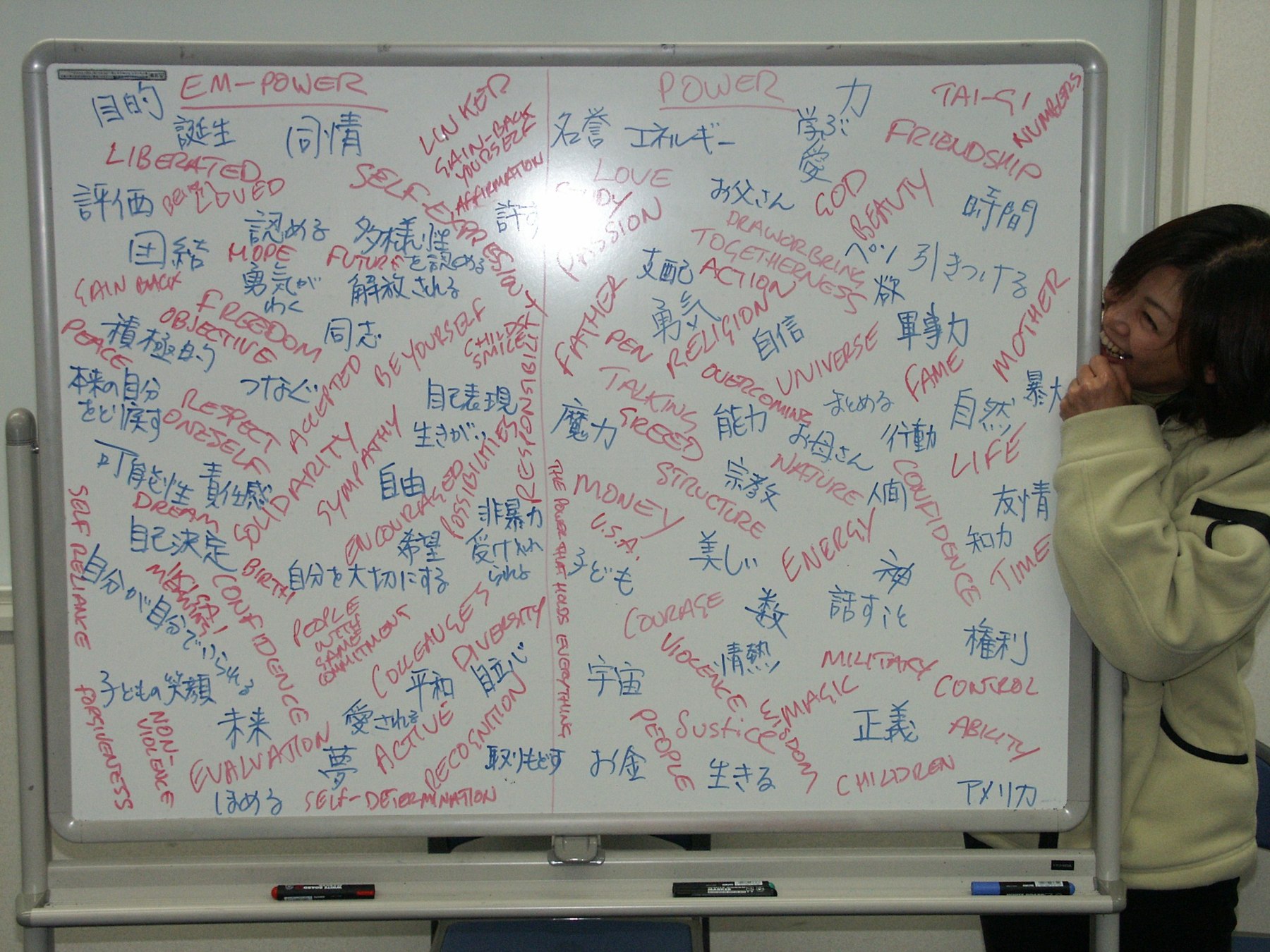
There is another way ideas can travel. They do not always have to begin in one country and then be exported to another. Sometimes the international exchange is part of creating the work itself. In 2001, Actionwork's Two Becomes One, also known as 2B1, brought together Britain and Japan through an anti bullying and anti racism performance developed for Japan2001. Performing across both countries created opportunities to explore how language, humour, behaviour and the experience of bullying might be interpreted by different audiences.
Later European collaborations used technology to make the international exchange even more direct. Actionwork was the UK partner in the European Avatar at School project alongside organisations from Italy, Germany, Spain and Romania. The project created an online three dimensional environment in which pupils could take part in virtual role plays exploring bullying, conflict and peer mediation. Young people in different European schools were therefore not simply receiving the same resource. They could participate in a shared experience with pupils elsewhere.
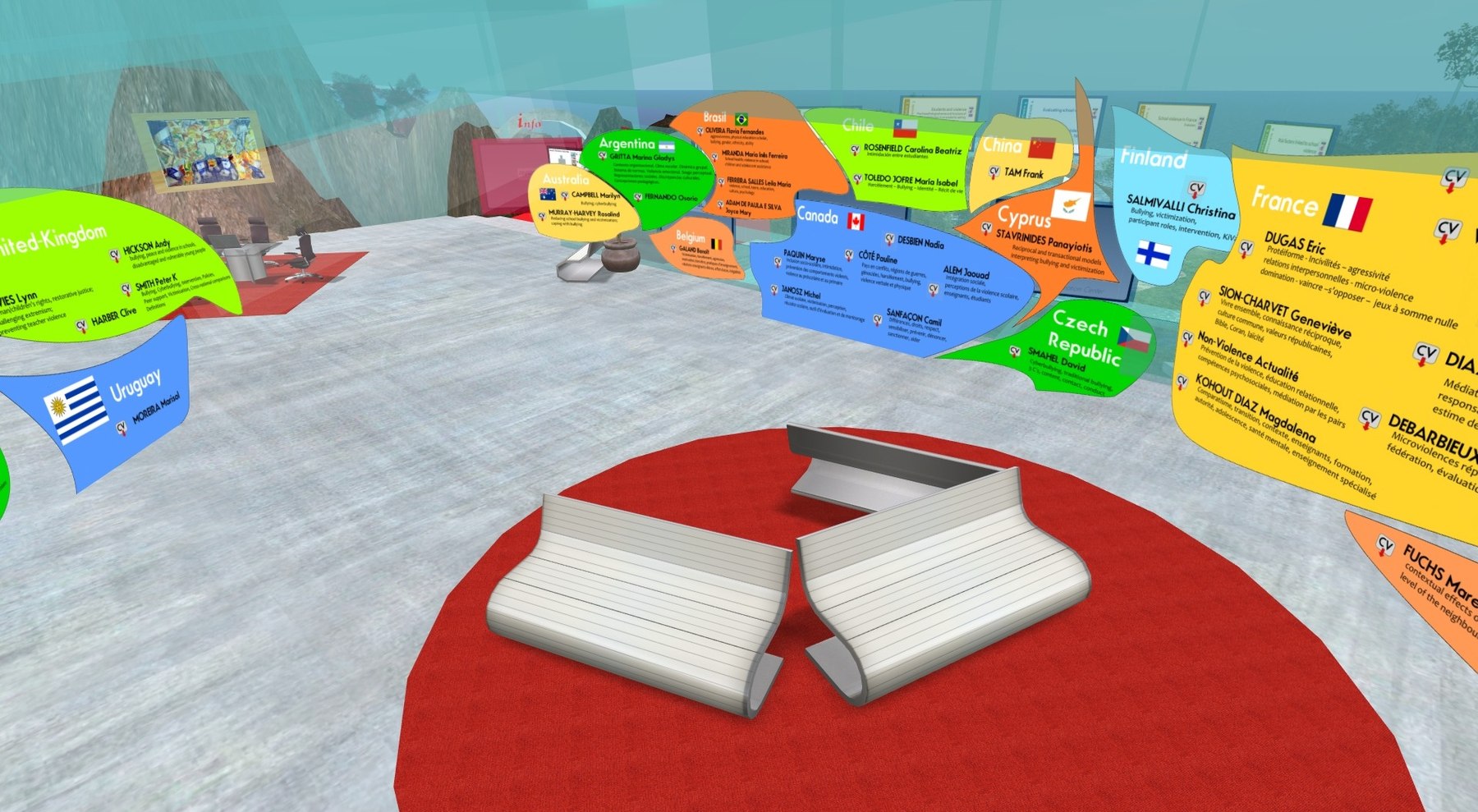
Actionwork was also one of seven European partners in the Anti Violence Campus in Second Life, involving organisations across Britain, Italy, Germany, Spain, France and Bulgaria. Actionwork managed the campus Creative Arts Centre, known as The Arc, where creative workshops, role plays, performances, exhibitions and films were used to explore bullying, violence, racism and xenophobia.
These projects suggest something different from programme export. When people from several countries create, test and experience something together, nobody has to occupy the permanent position of expert while everybody else receives the answer. Knowledge can move in several directions at once.
Adaptation is not failure
There can be a temptation to think that if an idea has to change when it reaches another country, something has gone wrong. Our earlier exploration of translation offers another way of seeing this.
Translation is not an all or nothing business.
Perhaps international practice is not either. An idea may remain valuable even though the way it is expressed or delivered has to change. The important question becomes what should remain recognisable, what can adapt and who gets to participate in making those decisions.
That final question matters particularly for young people. An approach can arrive fully formed and be delivered to them, or they can help interpret and reshape it within their own community. The difference takes us back once again to a question running through this site:
Do we make anti bullying work for young people, or with them?
What might this mean closer to home?
These questions do not matter only when a national programme crosses an international border. Schools, families and young people encounter ideas from elsewhere all the time. Something that apparently worked brilliantly in another school may be tempting precisely because somebody else seems to have solved the problem.
Perhaps the international evidence encourages a little curiosity before copying. What was happening around the successful idea? Who was involved in making it work? What mattered to the people using it, and which parts depended upon the community in which it developed?
Learning from elsewhere does not require us either to copy an approach exactly or reject it because our circumstances are different. There is another possibility. We can ask:
What have they learned, what can we learn from it, and what might we discover together?
Next: Can we really compare the numbers?
If an anti bullying programme can behave differently when it travels, international statistics deserve at least as much care. Two countries can both publish something called a bullying rate while asking different questions of different young people in different languages.
Before we compare those percentages, we need to ask:
Are we actually measuring the same thing?