
ABOUT
About AntiBullyingWeek.co.uk
My name is Andy Hickson and I founded AntiBullyingWeek.co.uk.

1. Why AntiBullyingWeek.co.uk exists
AntiBullyingWeek.co.uk exists to make useful anti-bullying information, ideas, research and practical resources freely available.
Bullying is complex. What helps one person may not help another, and there is no single approach that works in every situation. The site is therefore designed to help people explore different ideas, ask questions and make informed choices rather than simply present one fixed answer.
It is also about bringing people, experiences and ideas together. Bullying is understood and responded to differently across communities and countries, and there is value in seeing that wider landscape rather than assuming one model has all the answers.
By sharing those perspectives, the site aims to contribute to a broader conversation about how we listen to one another, respond to harm, understand difference and build safer relationships.
Anti-Bullying Week can create attention, energy and opportunities for action. This site is here to help people make something useful from that moment, during the week itself and beyond it.
The practical focus of AntiBullyingWeek.co.uk is children, young people, families, schools and youth settings. We do not attempt to provide comprehensive guidance on workplace bullying. Our creative partner Actionwork has experience of bullying work with adults and workplaces, including commissioned creative work in this area.
2. Why it matters to me
My connection with bullying began long before I started working in the field.
As a young boy, my family moved frequently and I changed schools again and again. I was often the new boy: without friends, without supporters and without knowing how things worked.
At one school, when I was six or seven, two boys began bullying me almost from the day I arrived. They kicked and punched me, called me names, spat at me, stole and damaged my things, ruined my clothes and tore up my schoolwork.
It went on day after day for months.
I did not know who to tell or what to do. I thought perhaps this was simply part of growing up. I tried pretending to be ill so that I would not have to go to school. At playtimes I sometimes tried to stay inside, but was sent outside again.
Eventually I began waiting in the middle of the playground so that the boys could find me, do what they were going to do, and I could get it over with.
Then one day something changed.
As I waited for them, a girl suddenly stepped in front of me, spread out her arms and confronted them. She had seen what was happening for long enough and decided to act.
The boys stopped.
The girl and I became friends, and the bullying stopped too.
I learned something that has stayed with me ever since: there are people who will help, but children cannot always be expected to find them. Sometimes somebody else has to notice and step forward.
I also learned, at a rather young age, never to underestimate the power of a girl standing her ground.
A very different childhood experience
A few years later, my life changed again.
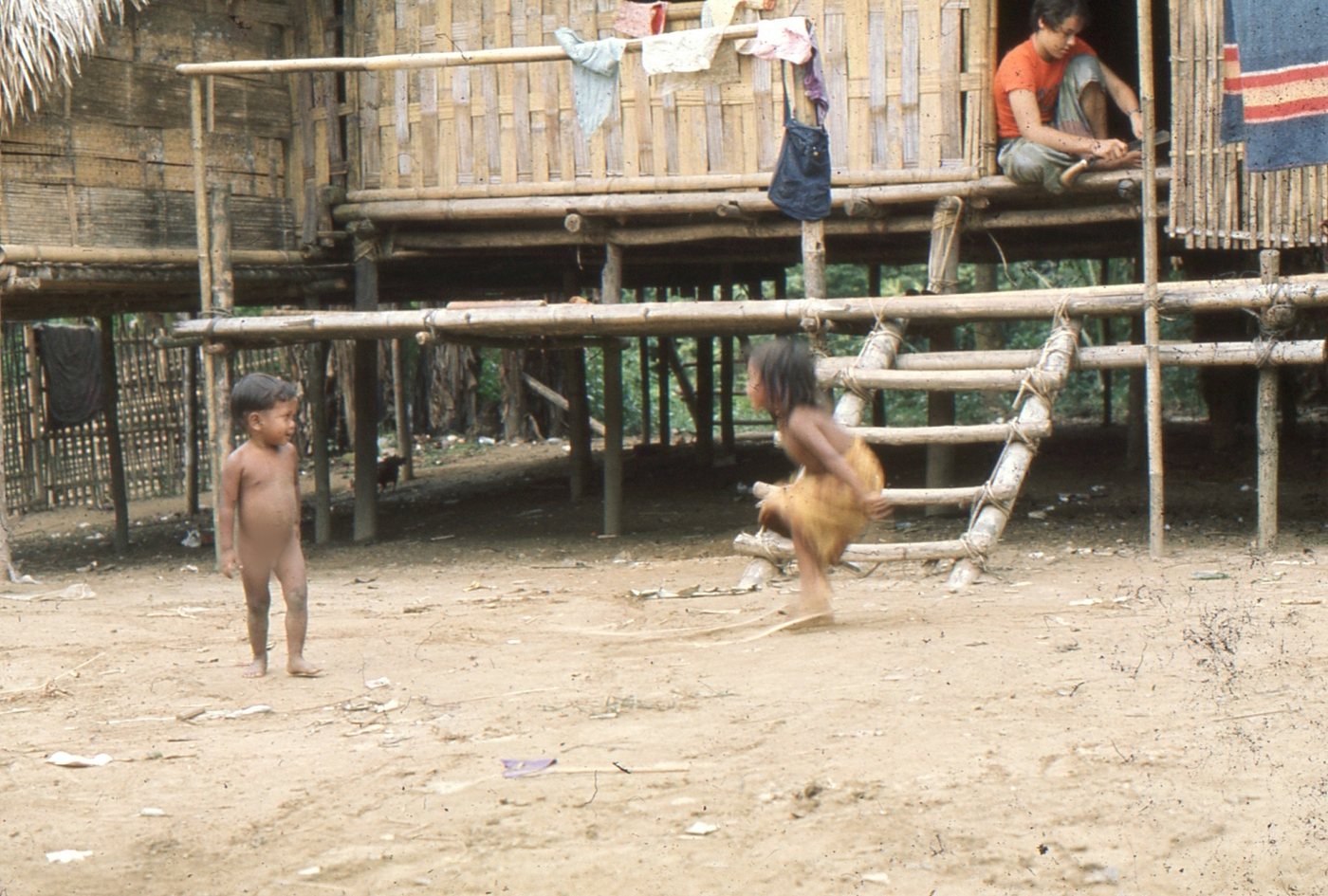
At thirteen I spent time living among the Temiar people deep in the Malaysian jungle. I had arrived carrying many of the experiences of a child who had often felt misunderstood, powerless and unheard.
Suddenly I found myself being treated with respect. My voice mattered. I was included in conversations and treated much more as an equal.
What struck me most was the absence of the kinds of violence I had come to regard as normal. In the Temiar community I knew, I did not see children being hit, partners abusing one another, people fighting, or children being forced to comply simply because an adult had greater power.
Things were shared. People listened.
The contrast transformed the way I understood growing up.
I realised that bullying and violence were not inevitable parts of childhood. Young people's voices could matter as much as adults'. Everyone could have something worth contributing.
I was also struck by where violence seemed to exist in the jungle around us. The dangers I encountered came largely from outside human relationships: thunderstorms, lightning and the possibility of tigers. I was living deep in the jungle within a community where I saw very little interpersonal violence for children to observe, copy or learn from.
As an adult, I came to understand another aspect of Temiar thinking that stayed with me: the boundary between self and other can be understood differently. We often think of harm as something one person does to somebody else. A more connected way of seeing human relationships asks what happens if, in hurting another person, we also damage something of ourselves and of the community we share.
Those two childhood experiences sit at the heart of why this subject has stayed with me.
One taught me what it can feel like when nobody intervenes.
The other showed me that another way of living together is possible.
3. Independent by design
AntiBullyingWeek.co.uk is independent by design.
We do not receive public funding, and the site is not financially supported by any government department, charity, alliance, commercial provider, campaigning organisation or other external group.
That matters because independence creates room to ask questions, compare different approaches and acknowledge disagreement without having to reflect the priorities of a funder or organisation.
It means we can include ideas because they may be useful, examine approaches that have become accepted, highlight work that may sit outside the mainstream, and change our position when better evidence or experience suggests we should.
It also means being willing to say when the evidence is uncertain, when different people disagree, or when something that sounds good does not appear to work for everyone.
Independence gives us the freedom to follow the evidence, ask awkward questions and contribute to the wider conversation without being told what the answer should be.
Actionwork contributes experience to the site and is the creative delivery partner for commissioned schools and workshops work. That relationship is transparent, but it does not determine the editorial position of AntiBullyingWeek.co.uk.
The site is intended to remain a place where different voices, research, experiences and ideas can meet openly.
AntiBullyingWeek.co.uk is also intended to keep developing as new research, ideas and experiences emerge. That means reviewing material, correcting things when necessary, checking external links, updating time-sensitive content and being willing to add perspectives we may have missed.
The aim is not to present a finished answer to bullying. It is to keep contributing something useful to the conversation.
If you spot something that is wrong, know of useful research or practice, have a correction or suggestion, or think there is an important perspective or something else that could add to the site, we would like to hear from you.