
Chapter 4
Young people and national action
The growth of national activity also created more opportunities for young people to contribute. Some work was designed for young people, while other projects tried to involve them in creating the response through conferences, peer support, films, workshops and campaigns.
One example was Making the Difference, commissioned by the Department for Education and Skills in 2005 and directed by Andy Hickson of Actionwork. The film was created as an anti-bullying resource with young people's voices and experiences central to the work.
At the same time, independent organisations around the country were developing their own projects. Some became widely known, while others survived only in local records, old websites, conference reports or the memories of those involved.
That less visible history matters too.
Anti-bullying reaches Parliament
Anti-bullying work was also reaching Parliament, and some of the parliamentary activity came directly from ideas raised by young people.
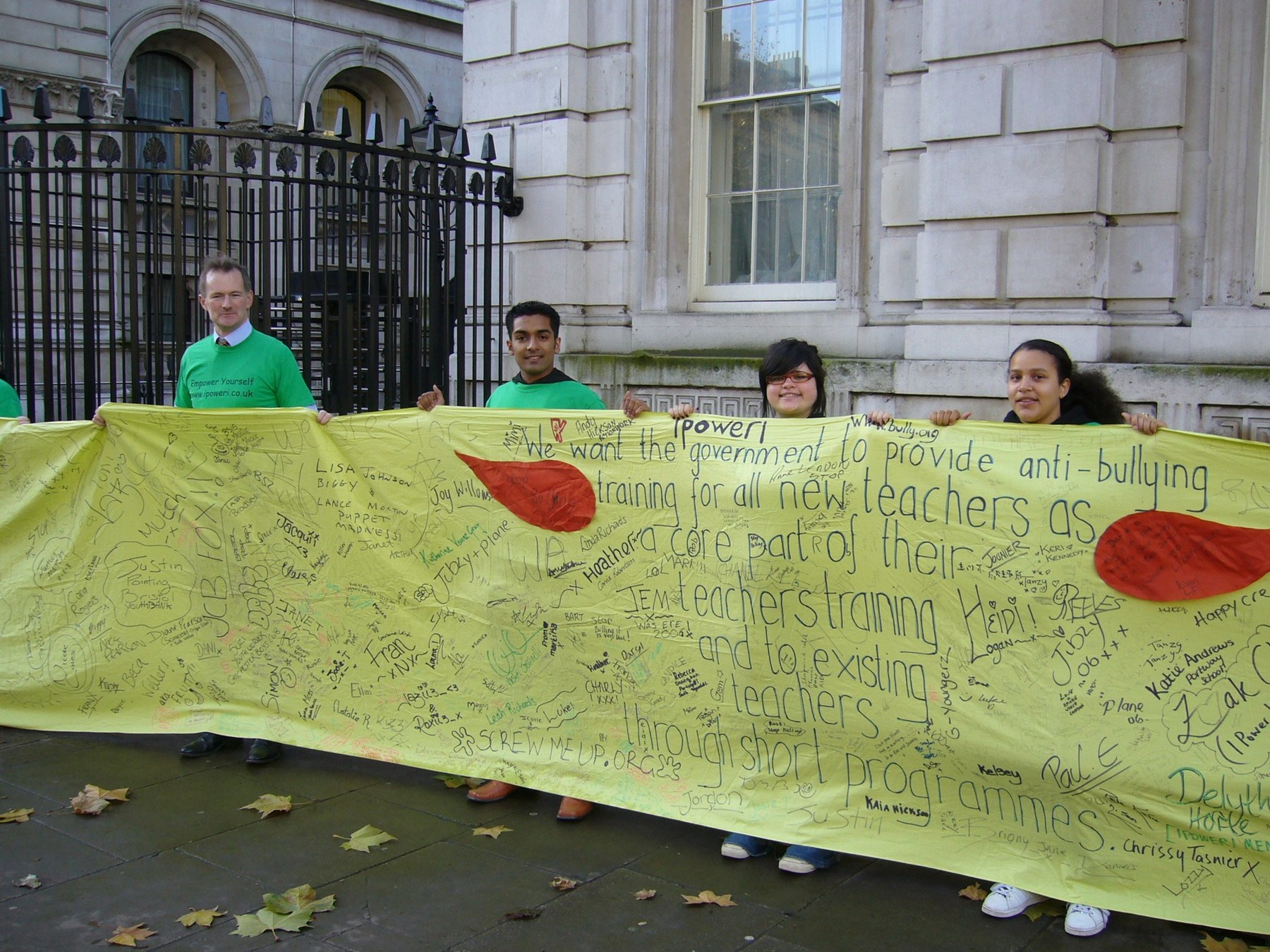
On 14 November 2005, John Penrose MP tabled Early Day Motion 1009, Anti-Bullying Initiatives for Young People. The motion grew out of the Actionwork I Power I national anti-bullying conference for young people, where participants had called for teachers to receive better preparation for dealing with bullying.
The motion recognised the work of the young people at the conference and called for intensive anti-bullying training for new teachers as part of teacher training, together with short intensive programmes for existing teachers. It eventually attracted 57 MP signatures.
A year later, John Penrose returned to the issue. On 4 December 2006, he tabled Early Day Motion 382, Anti-Bullying Training, which recognised the work of the Actionwork ipoweri young people and again pressed the case for better anti-bullying training. That motion attracted 72 signatures.
Together, the two motions gained 129 MP signatures.
They are an interesting part of this history because the proposal was not simply being generated by politicians or professional organisations. Young people had discussed what they thought was missing, and one of their conclusions was taken into Parliament.
There were other parliamentary approaches too. During Anti-Bullying Week 2005, David Cameron MP tabled a separate motion calling for bullying to be investigated rather than hidden or ignored, for people experiencing bullying to be supported and for schools to use sanctions where appropriate. Another motion, tabled by Dan Norris MP, strongly supported sanctions and criticised the No Blame approach.
These different motions reveal something important. Even when politicians agreed that bullying mattered, they did not necessarily agree about the best response.
National action also meant national funding
As anti-bullying work grew, government funding increased considerably.
The Department for Education and Skills recorded central spending on its anti-bullying strand of approximately £184,000 in 2002/03, £1.054 million in 2003/04, and £1.613 million in 2004/05.
The Department's own funding records also show where some of that money was going. In 2005/06, the three largest named external recipients in its anti-bullying funding table were:
Anti-Bullying Alliance: £600,628
Parentline Plus: £200,470
ChildLine: £200,000
The Department for Education's most recent published anti-bullying grant programme provided more than £3 million to five anti-bullying organisations between 10 August 2021 and 31 March 2024.
The figures show that anti-bullying work was no longer only a collection of local projects, voluntary campaigns and individual school initiatives. By the middle of the decade, substantial public money was supporting organisations, national programmes, conferences, resources and infrastructure.
That brought opportunities.
It also raised new questions about who received funding, how priorities were decided, which organisations gained influence and how a diverse collection of local and independent anti-bullying work fitted within an increasingly professional national sector.
Those questions will become important later in this history.