
Chapter 3
Young people enter the response
As bullying became a subject of research, young people were usually the people being studied. Adults designed questionnaires, developed interventions, wrote policies and decided what schools should do. Pupils provided information about their experiences, but increasingly another idea began to develop: perhaps young people could be part of the response itself.
This was an important change. Young people often know about bullying before adults do. They see relationships, hear language and understand peer groups in ways that may be largely invisible to teachers. Research cited in later work on peer support suggested that peers could identify bullying at an earlier stage than adults, while young people themselves frequently reported trying to deal with problems among their peers before approaching a teacher.
Peer support
During the 1990s, peer support became increasingly visible within British schools. The term covered several approaches, including befriending, peer counselling and mediation, but the common idea was that appropriately trained young people could listen to, support and sometimes help other young people think through difficult situations. Research by Helen Cowie and others helped establish peer support as a serious part of anti-bullying practice rather than simply an informal kindness between pupils.
This did not mean handing adult responsibility to children. Good peer support required preparation, supervision, boundaries and a wider school system behind it. But it challenged an assumption that the only useful expertise in a bullying situation necessarily belonged to adults.
Acland Burghley: pupils become part of the solution
One particularly interesting example developed at Acland Burghley School in north London. The school established its Anti Bullying Campaign, known as ABC, in 1993, training pupils as peer counsellors and mediators. The approach had links with peer counselling methods developed through the Sheffield anti-bullying work, but Acland Burghley took the idea in an interesting direction by involving young people who had experienced bullying as well as young people who had themselves bullied others.
The project attracted national attention. A BBC education documentary followed pupils aged around 14 and 15 as they trained to counsel younger students and showed some of the difficulties as well as the successes of giving young people this responsibility. A 1997 report described a pupil named Nadine Lee, who had previously sought help through ABC after experiencing bullying and later became a peer counsellor herself.
That is an important part of this history because it complicates the familiar roles of bully, victim and bystander. Young people did not have to remain permanently inside one label. Someone who had needed help could later provide it, while someone who had behaved harmfully could be involved in reflection and change.
The Acland Burghley project deserves remembering not simply because it was early, but because it demonstrated something that still matters:
Young people can be part of creating the response, not simply the people receiving it.
Did peer support work?
As peer schemes spread, researchers began asking whether they actually helped. A 1999 study by Patricia Naylor and Helen Cowie gathered the experiences of more than 2,300 pupils and staff across 51 mainly English secondary schools and colleges. Participants reported benefits not only for young people using the services but also for peer supporters and the wider climate of the school, although the research also identified problems and areas where schemes needed improvement.
That qualification is important. Peer support was never a magic solution. Some schemes were poorly promoted, inadequately supported or rarely used. But even the presence of a credible peer support system could affect whether students perceived their school as a safer place.
The deeper lesson was not that adults should withdraw. It was that a school could widen the number of people capable of noticing, listening and helping.
Beyond the school gates
Most early peer support took place within a school. Trained pupils supported other pupils in the same community. But another possibility gradually emerged: young people could take what they had learned into other schools and groups.
This later became the basis for what Andy Hickson described in his research as External Peer Support. Instead of remaining within their own institution, trained young people could share skills, ideas and creative anti-bullying work with young people elsewhere. Hickson's PhD describes examples in which secondary pupils worked with younger pupils, and later a core group received extensive training before creating and delivering their own creative anti-bullying workshops in different educational settings.
The idea was not that visiting young people should investigate another school's bullying cases. Their role was different. They could raise awareness, share strategies, create conversations and demonstrate what peer led learning might look like.
Young people take the stage
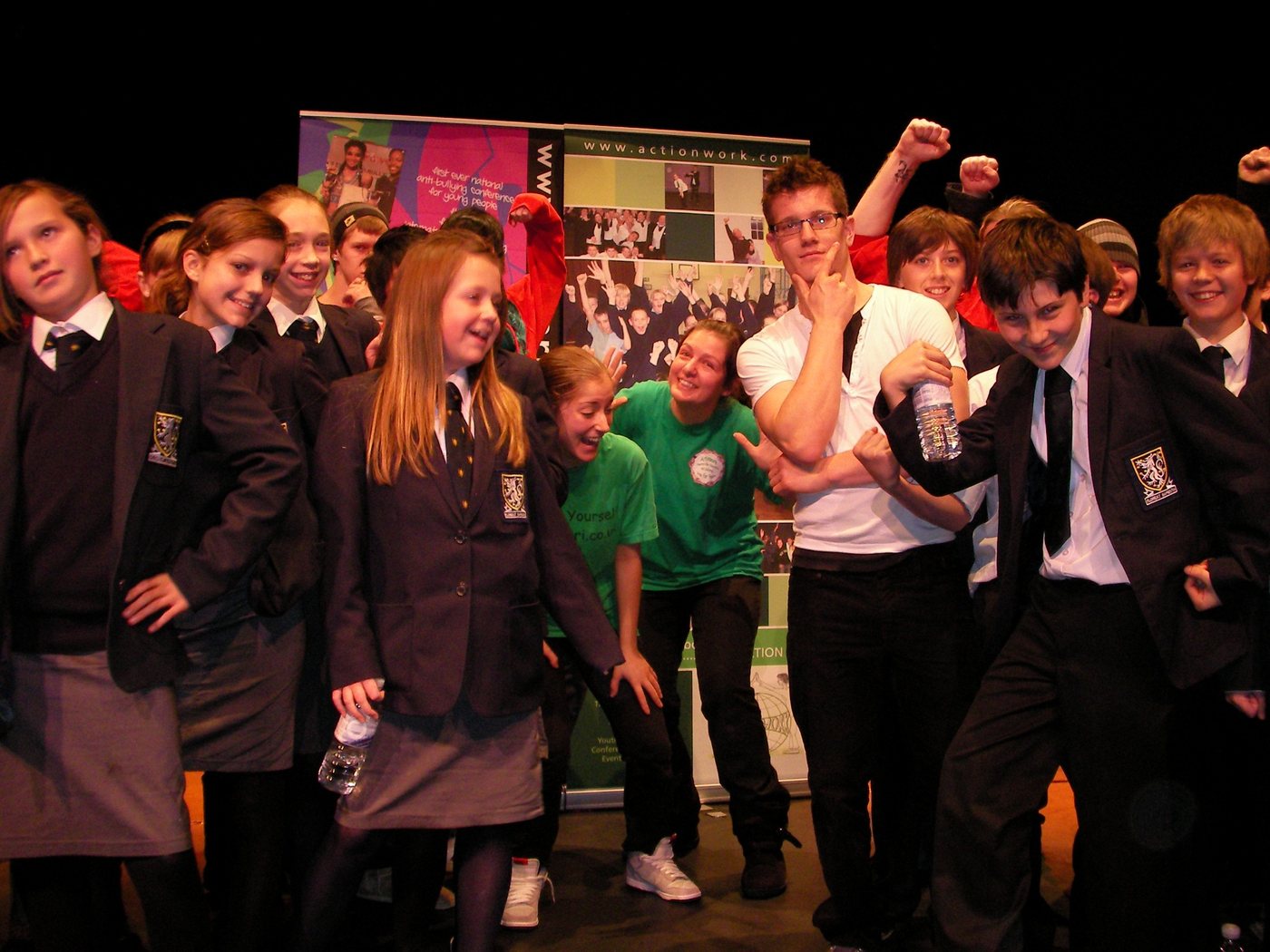
By the early 2000s, youth participation was also moving beyond individual schools. Actionwork's national anti-bullying conference for young people in 2003 brought young people together as delegates, facilitators and speakers, sharing their knowledge and approaches with other young people. Surviving Actionwork records describe it as Britain's first national anti-bullying conference specifically for young people, and the event became part of a continuing series.
This matters less because of a claim to being first than because of what the event represented. Young people were no longer simply sitting in an audience while adults explained bullying to them. They could present, question, create and exchange ideas themselves.
Government work also began giving greater space to youth produced material. The DfES Making the Difference film in 2005, created for young people with young people at the centre of the process, is one example worth preserving. It sits within a wider period in which young people were increasingly being asked not merely what they had experienced, but what they thought should be done about it.
From participation to influence
There is an important caution in this story.
Inviting young people into a room does not automatically give them influence.
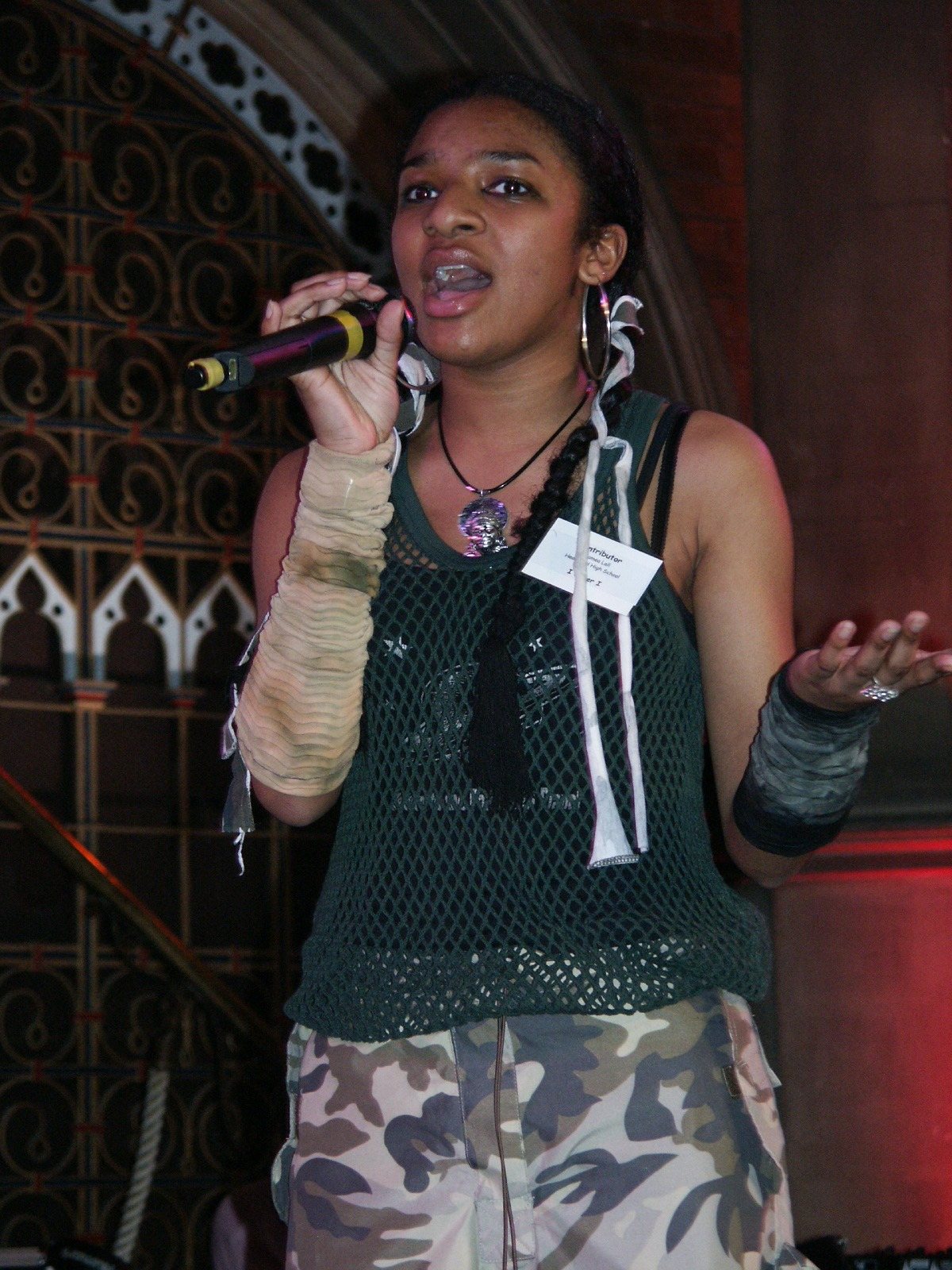
A pupil can attend a meeting, appear in a photograph, fill in a questionnaire or perform in a campaign and still have very little say over what actually happens.
The more challenging idea is that young people might influence the questions being asked, the activities being created, the language being used and the decisions being made.
That distinction between participating and having influence will become increasingly important as anti-bullying work expands nationally.
The next part of the story brings together government, charities, schools, campaigners, researchers and young people around something that would become a regular fixture in the UK calendar:
Anti-Bullying Week.