
Independent evaluation
Actionwork: what an independent evaluation found
Before choosing an external provider, schools may reasonably want to know more about who they are inviting in.
In 2015, the University of Plymouth completed an independent evaluation of Actionwork's work with schools.
The evaluation looked at schools' experiences of Actionwork workshops and services, observed programmes in practice and spoke with young people as well as school staff. Twenty-two primary and secondary schools participated, alongside ten young people; ten workshops were observed.
What did schools say?
All 22 schools taking part were positive about their experience of working with Actionwork, and all said they would recommend the organisation highly to other schools. Staff repeatedly described the work as professional, creative, engaging and appropriate for the age groups involved.
Schools particularly valued the way young people were actively involved rather than simply being talked to.
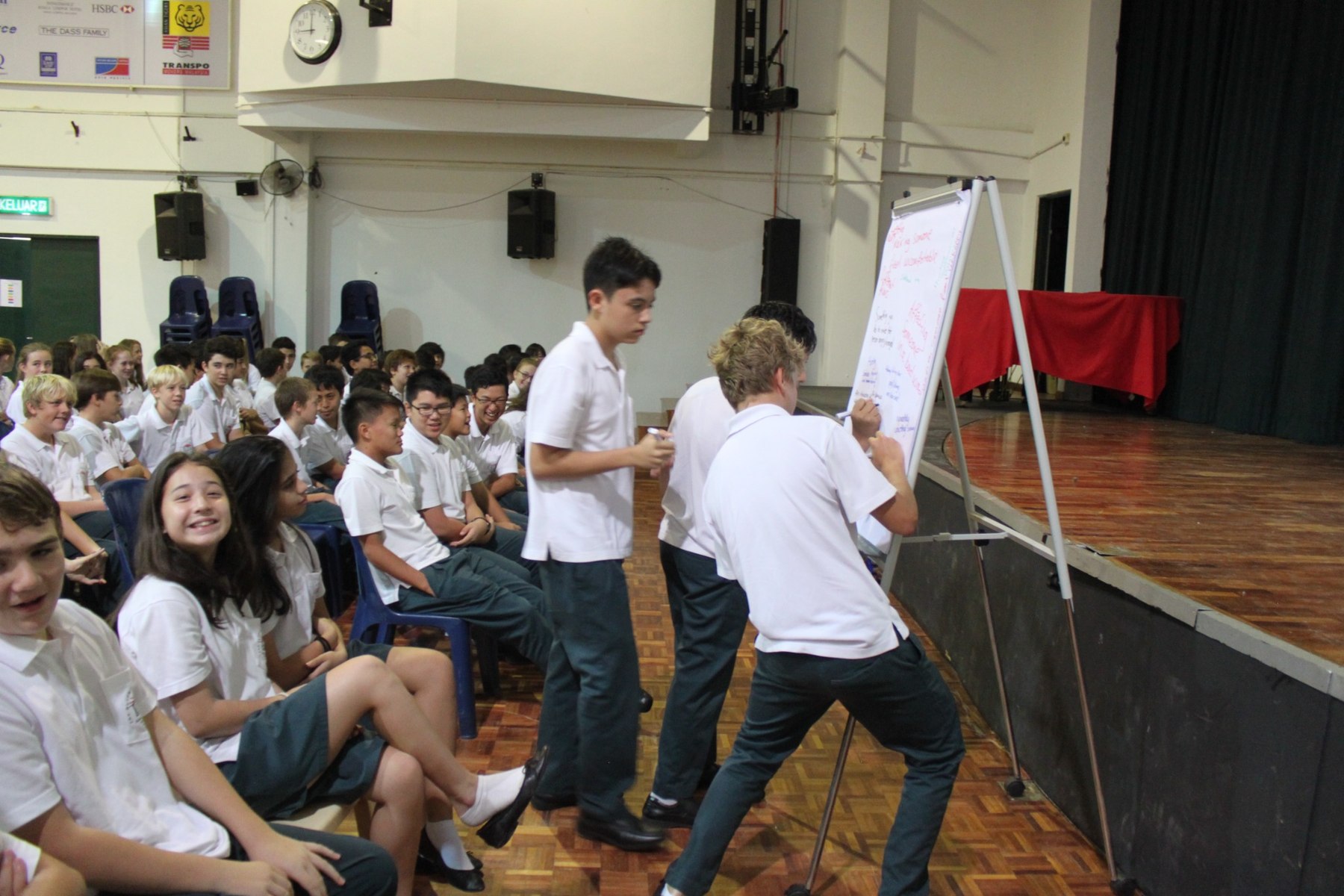
The evaluation found that workshops used a wide range of creative and participatory approaches, including drama, role-play, forum theatre, games, film, discussion and reflection. Observations found that pupils could suggest responses, test ideas and sometimes enter scenes themselves, so that learning was developed collaboratively rather than delivered as a fixed message.
Participation rather than passive listening
One of the strongest themes in the evaluation was learning through doing.
Schools reported that young people participated in the learning process, discussed ideas and explored situations experientially. The evaluation concluded that Actionwork's sessions were participatory, inclusive and supportive, with children and young people listened to and involved in the process.
This remains central to the approach described throughout AntiBullyingWeek.co.uk:
Do we make anti-bullying work for young people, or with them?
What happened after the workshops?
Schools reported that learning sometimes continued beyond the initial visit.
Examples included pupils using ideas from performances in later discussions, school councils becoming better equipped to act as ambassadors, pupils developing their own anti-bullying policy, peer mentors going on to provide support within their school, and schools changing policies or practice following programmes.
The evaluation also makes an important point that fits strongly with our approach today: the impact was considered greater when a programme complemented existing school practice and was followed up, rather than being treated as a one-off or tick-box exercise.
That is why Actionwork programmes now place particular emphasis on leaving schools with resources, ideas and possible next steps.
What did young people say?
Young people interviewed for the evaluation described Actionwork as supportive, approachable and willing to listen. They talked about gaining confidence, understanding bullying differently and learning practical ways of responding to difficult situations. Sessions were described as fun, important, empowering and informative.
Creativity and inclusion
The evaluation observed ten workshops and found that they used varied creative methods while remaining conscious of inclusion.
Schools said programmes were appropriately pitched for pupils' ages and highlighted examples where facilitators had adapted work sensitively for young people with additional needs.
The evaluation concluded that Actionwork was innovative and creative, that staff were professional and supportive, and that its work placed a strong emphasis on empowering children and young people through participation, knowledge and practical strategies.
The evaluation also identified challenges
The evaluation recommended more work to understand longer-term impact, noting the difficulty of obtaining follow-up information once a school programme had finished.
The evaluation also suggested that more sustained work with schools over time — particularly work developed collaboratively with children and young people — was likely to have greater influence on school practice and policy.
Those observations reinforce an important principle of the Schools & Workshops section:
something should happen afterwards.
A workshop, performance or training day can start something. What the school and young people build from it afterwards matters too.
About this evaluation
The evaluation was conducted in 2014–15, so it should be read as evidence about Actionwork's work at that time rather than as a contemporary evaluation of every programme offered today.
It involved 22 schools, all in England, that had previously worked with Actionwork. It was a participant-oriented evaluation rather than a controlled research trial.
We think those limitations are worth being clear about.
At the same time, the full report provides useful independent evidence about the approach underlying Actionwork's work with schools: creativity, participation, collaboration, inclusion, youth voice and learning through action.
Read the full evaluation
For anyone who would like to examine the methodology, school and pupil feedback, observations, conclusions and appendices themselves:
Read the full Independent Evaluation of Actionwork — University of Plymouth, 2015 (PDF)