
Chapter 11
2026 and the history still being written
In 2004, the first national Anti-Bullying Week brought together schools, government, charities and young people around an issue that had spent much of history being tolerated, minimised or treated as something children simply had to learn to survive.
Twenty two years later, Anti-Bullying Week is firmly established. The Anti-Bullying Alliance says the week now reaches an estimated eight million children and young people and more than 80 per cent of schools each year. The 2026 week takes place from 16 to 20 November with the theme Break the Silence.
A great deal has changed since 2004.
But not everything.
What has changed?
Bullying is much harder for institutions simply to dismiss as part of growing up. Schools have responsibilities to address it. Safeguarding, equality and behaviour frameworks provide routes for responding to some of the harm surrounding it. Northern Ireland has put a definition of school bullying into legislation. France has gone further and created a specific criminal offence of school harassment.
Our understanding has widened too. Physical intimidation remains bullying, but research has brought greater attention to exclusion, relationships, peer groups, discriminatory behaviour, disability, sexuality, identity, power and the sometimes complicated movement of young people between different roles.
Technology transformed the geography of bullying. A playground incident can now continue into the evening through a group chat, an image can acquire an audience far beyond the people who witnessed the original event, and something posted once can be experienced repeatedly as it is shared and viewed.
The response has changed with it. Peer support can happen online. Young people can report experiences digitally. Organisations can gather the views of thousands of young people rapidly. Anti-bullying work increasingly overlaps with mental health, relationships, identity, online safety and digital literacy.
The professional infrastructure has grown enormously too. There are national organisations, specialist charities, researchers, training programmes, resources, workshops, conferences and decades of evaluation.
Anti-bullying work is no longer marginal.
And what has not changed?
For all that development, some surprisingly basic questions remain.
What exactly is bullying?
We still do not have one agreed answer.
Researchers disagree about the importance of intention, repetition and power. Different countries use different definitions. The four UK nations do not regulate bullying in exactly the same way. One organisation may require repetition while another may recognise that a single act can have a repeated impact.
The question we encountered near the beginning of this history remains with us at the end:
Before we can count bullying, we have to decide what we are counting.
That creates another unresolved problem.
How much bullying is actually happening?
England still does not require schools to report bullying incidents to a single national system. In 2024 the Department for Education confirmed that there was no legal requirement for schools to record and report those incidents nationally.
We have prevalence studies, surveys, research projects and data collected using different questions and different definitions. They can tell us a great deal.
What they cannot easily provide is one consistent measure showing what has happened to bullying across the UK over the last twenty years.
We have become much better at producing anti-bullying activity than at answering the apparently simple question:
Is there less bullying?
The adults are still learning too
Teacher preparation has moved forward. From September 2025, bullying is explicitly included within England's Initial Teacher Training and Early Career Framework, with new teachers expected to learn how to respond when bullying threatens physical or emotional safety.
That matters.
But it also brings us back to the young people who, twenty years earlier, asked for proper anti-bullying training for teachers through the I Power I campaign.
Their question has not disappeared simply because the word bullying now appears in a national training framework.
What does a teacher actually need to know?
How much training is enough?
Can they recognise bullying that does not look like bullying?
Can they work with the person experiencing it and the person carrying it out?
Do they know what to do when an intervention does not work?
And do they follow up?
The history suggests that responsibility without preparation is not enough.
The field keeps expanding
Even in 2026, the meaning of anti-bullying work continues to widen.
In July 2026 the Department for Education published new guidance specifically addressing bullying, harassment and intimidation of school staff in England. The guidance concerns the responsibilities of employers to support and protect staff, showing how the language and policy world surrounding bullying now extends well beyond relationships between pupils.
Digital environments continue to change too. The platforms young people use today will not necessarily be the platforms they use in ten years. Artificial intelligence, manipulated images and new communication technologies will create possibilities that anti-bullying policies written even recently may not have anticipated.
The technology will change.
Some of the underlying human questions probably will not.
Who has power?
Who is being harmed?
Who notices?
Who joins in?
Who speaks?
Who listens?
And what happens next?
Break the Silence
The 2026 theme therefore has an interesting place in this history.
Break the Silence was shaped with input from more than 200 children and young people, many of whom spoke about the silence surrounding bullying and the barriers to asking for help.
That is important.
But breaking the silence cannot mean placing the whole responsibility on a young person to speak.
Someone may remain silent because they are frightened of retaliation, because previous attempts to get help failed, because they fear making things worse, because they do not believe they will be taken seriously, or simply because they do not yet know how to describe what is happening.
Silence can also exist around the young person.
A witness may say nothing. An adult may decide not to become involved. An organisation may minimise a problem because acknowledging it feels uncomfortable or damaging to its reputation.
That is why breaking the silence has to involve more than asking people experiencing bullying to tell us about it.
It also requires places where people know they will be heard.
Acknowledging that bullying exists within a school, organisation or community is not an admission that the organisation has failed.
It can be the beginning of changing what is happening.
Who owns the next part of the history?
One theme has appeared repeatedly throughout these chapters.
Adults have researched young people, designed programmes for them, written policies about them, organised campaigns around them and spent substantial amounts of money trying to protect them.
Some of that work has undoubtedly helped.
But young people have also repeatedly demonstrated that they can do much more than receive anti-bullying work.
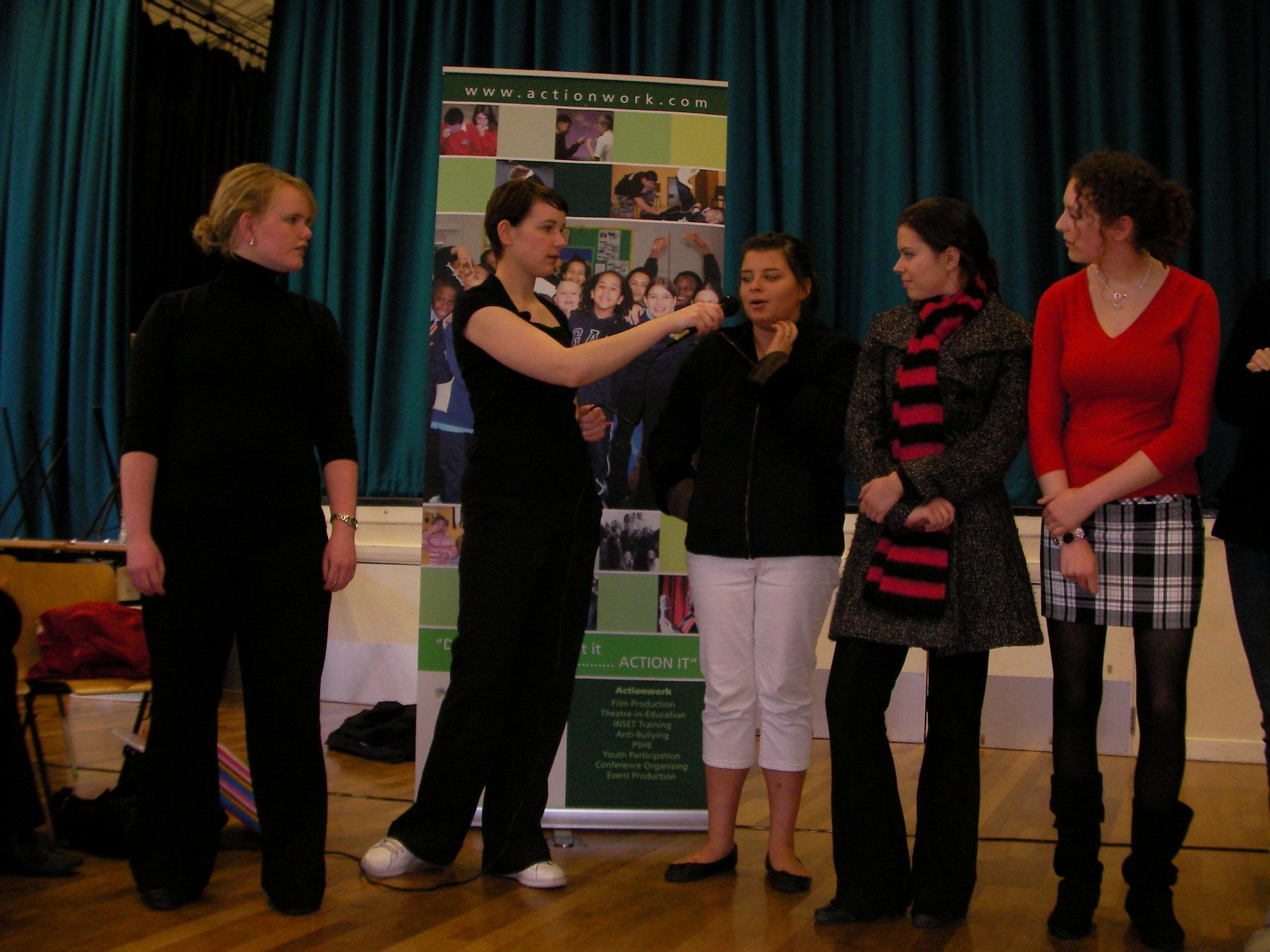
They have acted as peer supporters, researchers, campaigners, conference speakers, filmmakers, workshop leaders and contributors to legislation and national campaigns.
In 2005 young people were asking Parliament to improve teacher training.
More than twenty years later, young people helped shape the theme of Anti-Bullying Week 2026.
Those examples are separated by two decades, but they point towards the same question:
Do we make anti-bullying work for young people, or with them?
A week is still only a week
Anti-Bullying Week has achieved something remarkable simply by surviving.
Governments have changed. Ministers have changed. Organisations have appeared and disappeared. Technologies have transformed. Funding priorities have shifted. Definitions have been debated and rewritten.
Yet every November, bullying returns to national attention.
That visibility matters.
But the original purpose of Anti-Bullying Week was never that five days of activity would somehow cure bullying.
A week can create attention. It can start conversations, showcase work, challenge assumptions, introduce ideas and give people permission to talk about something they may otherwise avoid.
A week can be a catalyst. It cannot, by itself, cure bullying.
The more important test comes afterwards.
What happened because of the assembly?
What changed because of the workshop?
Did anybody alter the policy?
Did young people gain more influence?
Did adults listen differently?
And, most importantly:
Did the bullying stop?
The history is still being written
This history began long before anybody had an anti-bullying policy.
It travelled through school traditions in which harsh treatment could be regarded as character building, the first systematic research, changing definitions, peer support, national campaigns, Anti-Bullying Week, legislation, teacher training, digital communication and the emergence of a professional anti-bullying industry.
Along the way we spent millions of pounds. We commissioned research. We created programmes, films, performances, workshops, conferences, policies, websites, campaigns and evaluations.
And after all of that, we still cannot agree completely on what bullying actually is.
Perhaps that is not simply a failure.
Perhaps it reminds us that bullying is not a single object waiting for researchers to discover its perfect definition. It happens within relationships, cultures, institutions, technologies and different balances of power. Those things change.
So our understanding may need to change too.
What matters is that uncertainty about the definition never becomes an excuse for uncertainty about harm.
Something does not have to fit perfectly inside the word bullying before we take it seriously.
The history of anti-bullying work is therefore unfinished.
What happens next will be shaped by researchers, governments, schools, organisations, families and practitioners.
But if we have learnt anything from the last several decades, another group needs to be there too.
Young people.
Not simply being asked what they think after the work has been designed.
Not simply appearing in the campaign.
Not simply receiving the resources.
But helping decide what happens next.
Because 2026 is not the end of the history.
It is where the next part begins.