
Chapter 1
Before bullying meant bullying
Bullying did not begin when somebody invented a word for it. Long before researchers began measuring bullying, and long before schools had anti-bullying policies, people were writing about power, humiliation, ridicule, exclusion, fear and the treatment of those who were less powerful.
We need to be careful when looking backwards. It would be misleading to take a modern definition and simply declare that people thousands of years ago were describing bullying exactly as we understand it today. They were not. But some of the behaviours, relationships and questions they described can look surprisingly familiar.
Schooldays, about 4,000 years ago
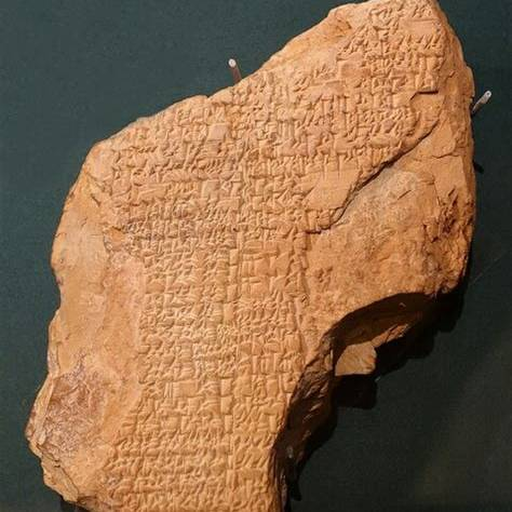
One of the earliest places we can look is ancient Mesopotamia. A Sumerian composition now known as Schooldays, probably written around 2000 BCE, tells the story of a pupil attending a scribal school. The student worries about being late, is punished for poor work and describes being beaten by different authority figures for talking, moving without permission and other offences. More than twenty copies or fragments survive, suggesting that the composition became a familiar part of scribal education.
This is not a story about peer bullying, and historians caution against treating the text as a straightforward documentary record of an ancient school day. What interests us is something broader. Here, thousands of years ago, is a young person's imagined voice describing fear, punishment and the experience of having very little power in an educational setting.
That gives us a question that will recur throughout this history:
What happens when somebody with greater power uses it against somebody with less?
The strong and the weak
Around the fifth century BCE in China, the philosopher Mozi wrote about the ways unequal power could be abused. In discussing government based upon force, the surviving text describes the great attacking the small, the strong plundering the weak, the many oppressing the few, the honoured disdaining the humble and the rich mocking the poor.
Mozi was not defining bullying. But more than two thousand years later, power imbalance remains one of the ideas that repeatedly appears in definitions of bullying. The terminology may be comparatively recent. The problem of people using greater power against those with less is not.
Ridicule, insults and humiliation
Other traditions approached similar questions through behaviour between people. In the seventh century, the Qur'an warned against ridiculing others, insulting one another and using offensive names. Centuries later, historical accounts of education in Abbasid Baghdad describe rivalry between students, ridicule of academic performance and discrimination connected with social or geographical background.
We should again resist simply relabelling these accounts as modern bullying. The Baghdad evidence is particularly interesting because modern historians themselves have asked whether older descriptions of humiliation and domination can be understood through the concept of bullying.
That leaves us with another useful question:
When does cruelty, hierarchy or humiliation become something we call bullying?
What can harsh treatment do to a child?
In the fourteenth century, the North African historian and thinker Ibn Khaldun considered the effects of excessive severity in education. He argued that harsh treatment could leave children feeling oppressed, reduce their confidence and encourage them to conceal what they really thought because they feared further punishment.
The observation feels remarkably contemporary. When people fear the consequences of speaking honestly, silence can become a form of protection. That is not confined to children, and it is certainly not confined to the modern world.

Then the word itself changes
The English word bully has an unexpected history. Its earliest known English use in the sixteenth century was not an insult at all. It could mean a sweetheart or loved one, probably connected with the Middle Dutch boele, meaning lover. Over time its meaning moved through ideas of a fine fellow and then a blustering or intimidating man before developing the familiar sense of somebody who harasses or intimidates a weaker person.
So one of the most familiar words in this entire subject began with almost the opposite meaning.
That is worth pausing over because words are not fixed. People change how they use them, meanings evolve and the boundaries around concepts shift. As we have already seen in What is Bullying?, that process is still happening.
Enter the school bully
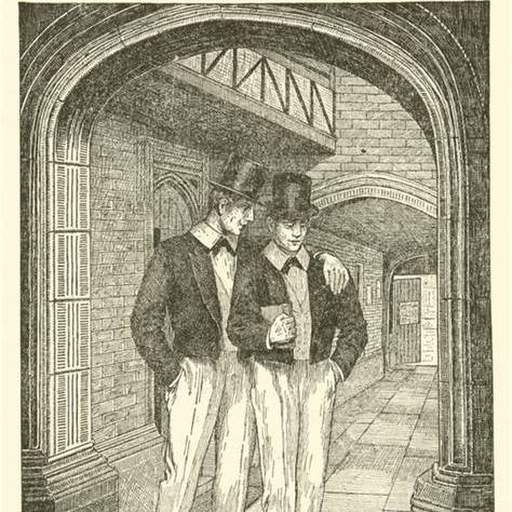
By the nineteenth century, the bully had become a recognisable figure in British school life and literature. One of the best known examples is Flashman in Thomas Hughes's Tom Brown's School Days, published in 1857. Flashman does considerably more than tease Tom. In one notorious episode he and other boys forcibly hold Tom in front of a fire until he becomes pale and collapses.
The fictional Flashman helped make the brutal older schoolboy a familiar cultural image, but the novel also opens a window onto nineteenth century ideas about childhood, hierarchy, toughness and character. Boys could be expected to withstand hardship and learn to stand up for themselves.
That creates another tension which has never entirely disappeared:
When does encouraging resilience become expecting somebody simply to tolerate preventable harm?
Resilience can help us deal with difficult experiences. It should not become an excuse for leaving harmful behaviour unchallenged.
From behaviour to a subject of study
By this point, we have travelled from ancient Mesopotamian schooling through Chinese philosophy, religious teaching, medieval education and changing language to the familiar Victorian school bully.
There were stories, observations, moral arguments and descriptions of cruelty, humiliation and power. What there was not yet was anything resembling a substantial science of bullying.
That came later, when researchers began trying to identify bullying, define it, measure it and ask why it happens.
And that created a problem we are still dealing with:
How do you systematically study something when people do not entirely agree on what it is?