
Ideas and activities
Break the Silence
There are many ways to explore Anti-Bullying Week.
You might talk. You might make something. You might move, perform, write, draw, film, listen or play.
The activities here are starting points. Adapt them for the age, needs and interests of the young people you are working with.
Where possible, involve young people in choosing, changing or creating the activities themselves.
Before you begin
Activities about bullying can bring up real experiences. Think about how you will introduce the activity, what support is available and what you will do if somebody shares a concern.
Nobody should be pressured to disclose personal experiences in front of a group. Make sure young people know where and how they can speak privately if something comes up that they want help with.
And remember that an activity is not the end of the process.
Speak | Listen | Notice | Act | Follow up
What is silence?
Write or display the word:
SILENCE
Ask the group what it might mean in relation to bullying.
Silence might mean not speaking. But could it also mean not asking? Not noticing? Not believing? Knowing something is happening but not acting? Being afraid of what will happen if you tell somebody?
Let the group generate as many different kinds of silence as they can.
Then ask:
Which kinds of silence are easiest to break? Which are hardest? What might help?
This can become a discussion, wall display, piece of writing, artwork or starting point for another activity.
Listening to what we hear
Give everyone a pen and piece of paper. Ask the group to move slowly and silently around the space. Their task is simply to listen.
As they move, they write down everything they can hear. They might notice obvious sounds first, but encourage them to keep listening.
Sounds from inside the room. Sounds from outside. Movement. Breathing. Footsteps. Voices in the distance. Small sounds they would normally ignore.
After a few minutes, bring the group back together and compare notes. Most people will probably have heard more than they expected.
Ask:
What did you hear that you had not noticed before? Did different people hear different things? What did it feel like to concentrate only on listening? Was anything difficult to hear? What happens when we slow down and listen more carefully?
The activity can lead into a wider conversation about listening to people as well as sounds. Sometimes something is there, but we only notice it when we make the effort to listen.
Break the Silence Soundscape
Begin with silence. Invite the group to create sounds connected with bullying, speaking, listening or change.
They could use voices, breath, rhythm, words, movement, classroom objects or musical instruments.
Sounds might overlap. Some might be loud. Some might barely be heard. A voice might try to speak and disappear beneath other sounds. Another sound might interrupt. Someone might listen.
The group can build a short soundscape and then change it.
Ask:
What did the silence feel like? Which voices were heard? Which disappeared? What changed when somebody listened? Can you create a second version in which something changes?
Change the Picture
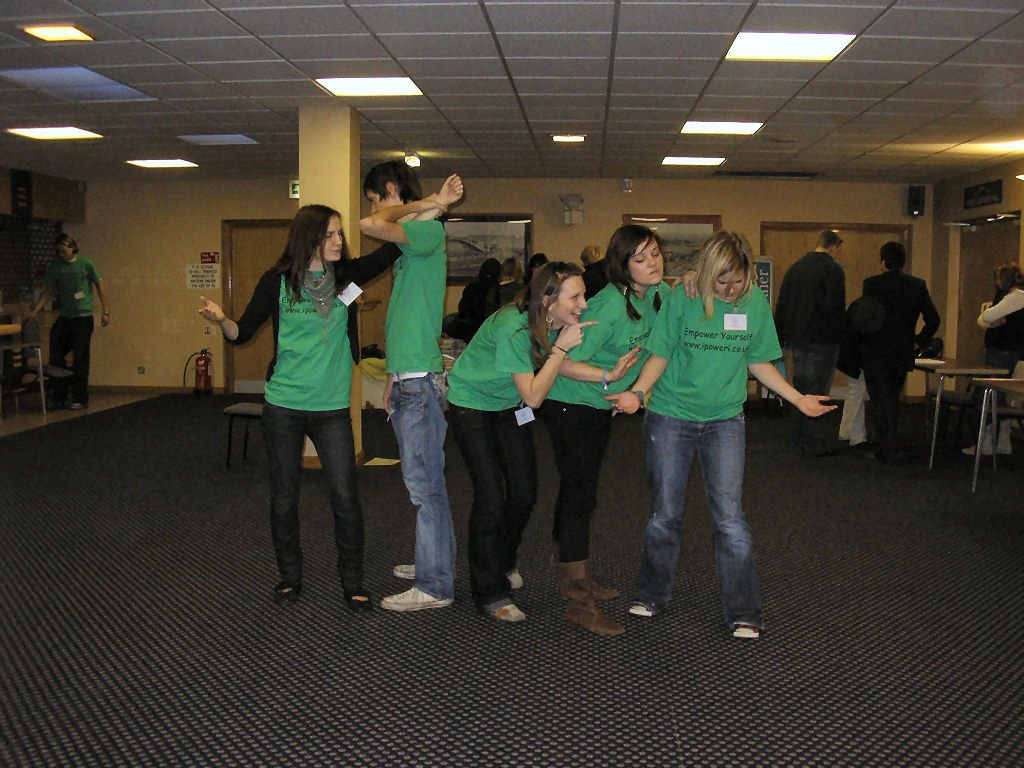
In small groups, create a freeze frame showing a moment connected with bullying. Do not begin by asking anyone to recreate their own experience.
Look at the picture together.
Who appears to have power? Who seems isolated? Who is watching? What might have happened just before this moment? What might happen next?
Now change one thing. Move one person. Change where somebody is looking. Bring a witness closer. Move somebody further away. Add an adult. Remove an audience.
Create a second freeze frame showing what might make the situation safer or different. There may be more than one possible answer.
The Impossible Anti Bullying Machine
Imagine you could build a machine that helped reduce bullying.
There are no limits. It can be enormous or tiny. Sensible or ridiculous. Mechanical, digital, magical or completely impossible.
What would it notice? What would it listen for? What would happen when somebody needed help? Would it change people's behaviour? Could it make somebody feel safer? Could it help witnesses act?
Draw it, build a model, act out how it works or create an advertisement for it.
Then ask the important question:
Is there anything your impossible machine does that people could actually do?
What happens next?
Give the group the beginning of a situation:
Someone tells an adult that they are being bullied.
Then ask:
What happens next?
Groups can write, draw, discuss or perform different possibilities.
What happens if the person is listened to? What if they are not believed? What if something is done immediately? What if nobody checks again? What would a good response look like?
This activity shifts the focus from simply telling people to speak towards what happens after they do.

The Witness Question
Create a simple fictional situation in which somebody witnesses behaviour that may be bullying.
Ask the group to think of as many possible responses as they can.
A witness might challenge what is happening. Walk away. Get help. Speak privately to the person afterwards. Join in. Film it. Ignore it. Tell somebody later.
There may be reasons why somebody does not feel safe enough to intervene directly.
Discuss:
What choices are available? Which might make things better? Which could make things worse? How can someone help without putting themselves at unnecessary risk?
The aim is not to find one perfect response, but to widen the range of possibilities young people can consider.
Make something that speaks
Ask individuals or groups to create something around Break the Silence.
It could be:
Give them one condition:
It should say something they think needs to be heard.
The work can remain private, be shared within the group or become part of a wider Anti-Bullying Week display or event. Young people should have a say in whether and how their work is shared.
Leave Something Behind
Create something during Anti-Bullying Week that does not disappear when the week ends.
It might be an anonymous question wall. A listening space. A collection of pupil ideas. A set of promises or challenges. A display of questions adults need to answer. A box where people can suggest changes. A creative installation that develops throughout the week.
Return to it later.
What was added? What did people notice? Did anything need a response? Has anything changed? What should happen next?
The aim is to leave behind more than photographs of Anti-Bullying Week. Leave behind something that can continue to be used.
Create your own
Some of the best activities may come from the young people themselves.
Give them the 2026 theme:
Break the Silence
And the five ideas:
Speak | Listen | Notice | Act | Follow up
Then ask:
What could we do with this?
They may come up with something you would never have planned for them.
After any activity
A few simple questions can help turn activity into reflection:
What did you notice? What surprised you? Whose voice was heard? Whose voice might still be missing? What could change? What happens next?
An activity becomes more useful when it leads somewhere.
Would external support be useful?
These activities can be delivered in house. If you would also like to explore workshops, creative work or other commissioned support for your school, visit Schools & Workshops.
Explore Schools & Workshops →